Data analysis & Insights
Deep insights into your training with exercise analysis, workout consistency tracking, and weekly reports.
The Analysis Page provides deep insights into your training performance, consistency, and physiological adaptation. It is divided into three main sections: Exercise Analysis, Workout Analysis, and the Weekly Report.
Getting Started with Analysis
New to fitness tracking? Here’s what each section offers:
| Section | What it Shows | Best For |
|---|---|---|
| Exercise Analysis | Progress on individual exercises over time | ”Am I getting stronger at Bench Press?” |
| Workout Analysis | How consistently you’re training | ”Am I sticking to my plan?” |
| Weekly Report | Comprehensive weekly summary with science-backed insights | ”How effective was my training this week?” |
The sections below go deeper into each area.
Exercise Analysis
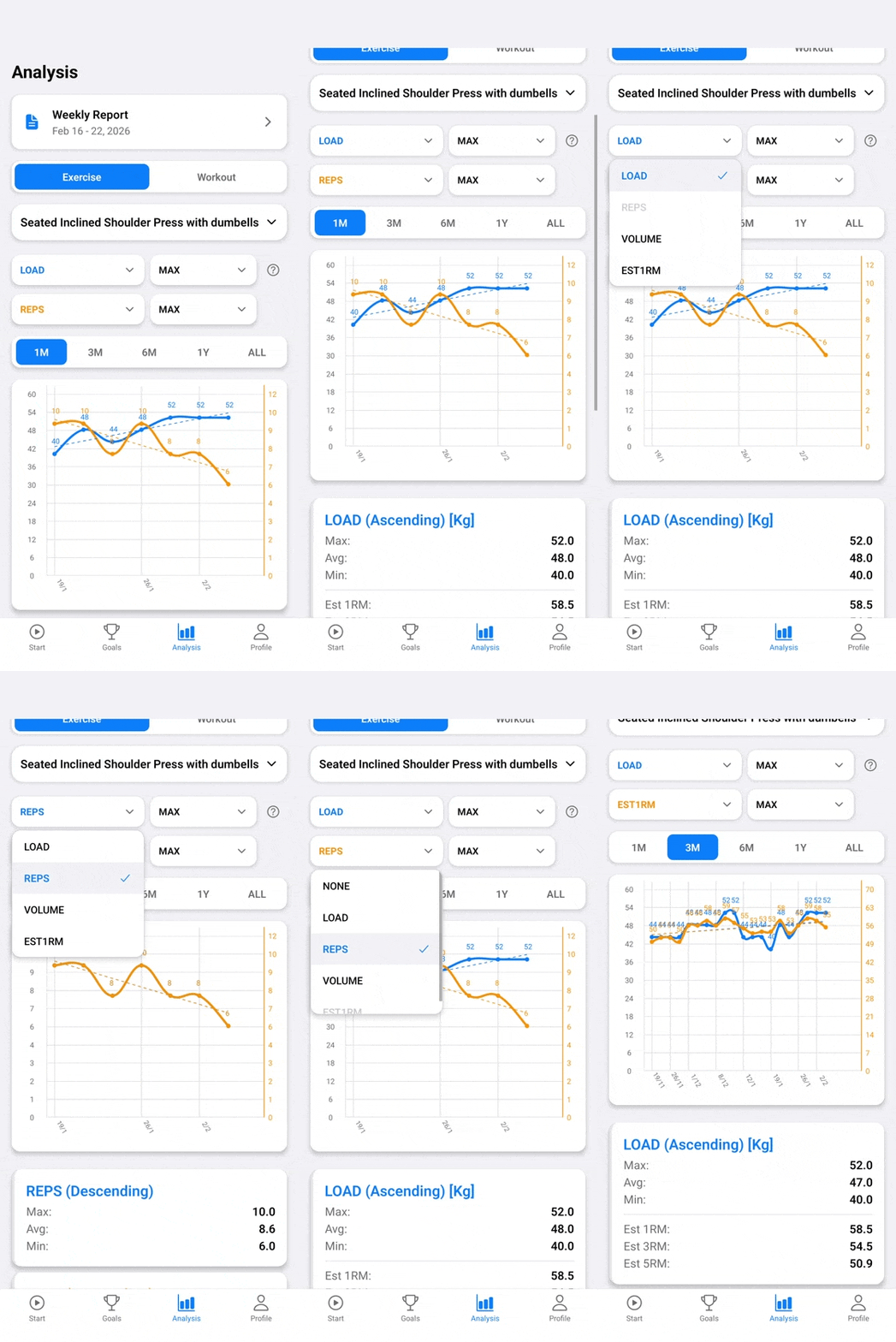
This section allows you to visualize your progress for individual exercises.
- Select Exercise: Choose any exercise from your history (e.g., “Seated Dumbbell Shoulder Press”).
- Select Metrics:
- Primary Metric: View commonly tracked data like Max Load or Estimated 1RM.
- Secondary Metric: Overlay additional data such as Reps, Volume, or Average Load.
- Visual Insights:
- Charts: See trends over time (1 Month, 3 Months, 6 Months, 1 Year, All Time).
- Summary Stats: View Max, Average, and Minimum performance for the selected period.
- Personalized Insights: The app analyzes the trend (e.g., “Max load improved 18%”) and provides actionable advice (e.g., “Keep current approach,” “Add progressive overload”).
Workout Analysis

This section focuses on your behavioral consistency and adherence to your plan.
- Consistency: Measures if you worked out as often as you planned.
- Calculation: Based on the frequency set in your Routine (e.g., 2x/week = 2 sessions logged).
- Adherence: Measures if you completed the work you planned within a session.
- Calculation: Based on checked sets. If you plan 4 sets but only check 2, adherence is 50%.
- Important: Unchecked sets are counted as “missed work.” If you skip an exercise, delete it or mark it inactive to avoid a drop in adherence.
- Inactive Periods: You can retroactively mark periods (e.g., illness, vacation) as inactive so they don’t skew your consistency data.
Weekly Report
Generated every Sunday at 8:00 PM (in your local timezone), the Weekly Report is a comprehensive summary of your training week.
Overview

- Summary Stats: Total workouts, duration, sets, and volume.
- Top Contributors: Exercises that contributed the most volume.
- Trends: Evolution of volume, duration, and frequency compared to previous weeks.
Hypertrophy Analysis
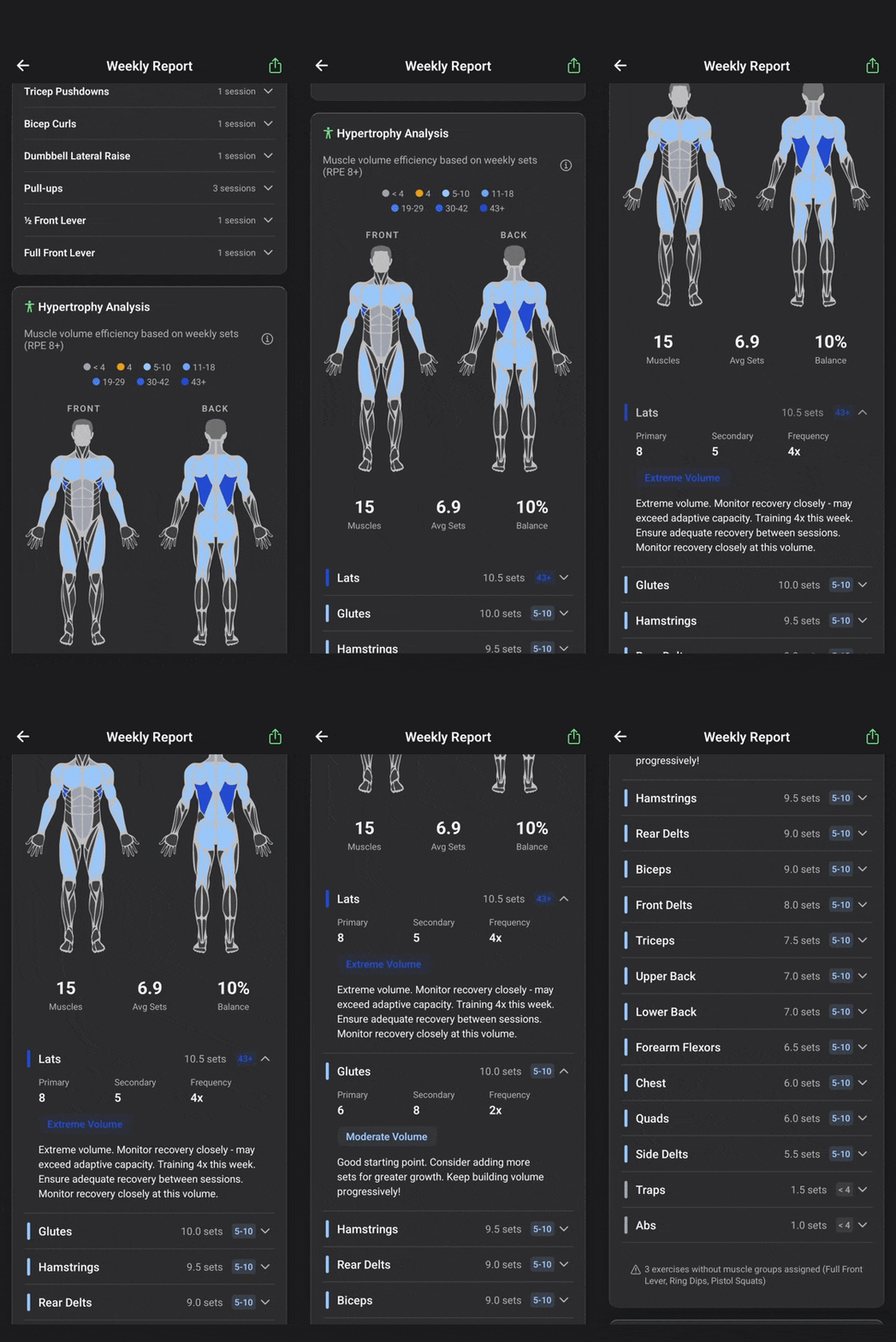
This advanced analysis is based on the meta-regression by Pelland et al. (2024), examining the nonlinear response of hypertrophy to volume and frequency.
-
Volume Calculation:
- Direct Sets: Count as 1 set (e.g., Bench Press for Chest).
- Indirect Sets: Count as 0.5 sets (e.g., Bench Press for Triceps).
- RPE Filter: Only sets with RPE ≥ 8 are counted.
Why RPE ≥ 8? Research shows that sets performed close to failure (2-3 reps in reserve) provide the necessary mechanical tension for muscle growth. Easier sets may build endurance but don’t trigger the same hypertrophic response.
-
Advice: The app compares your volume per muscle group against optimal ranges:
Weekly Volume Classification Efficiency ~4 sets Minimum Sufficient to elicit gains 5-10 sets Moderate Higher efficiency zone 11-18 sets High Good progress for most 19-29 sets Very High Still beneficial, monitor recovery 30+ sets Extreme Diminishing returns Key insight: More volume = more hypertrophy. The curve shows diminishing returns but no plateau.
Learn more about the science behind this analysis →
Strength Analysis
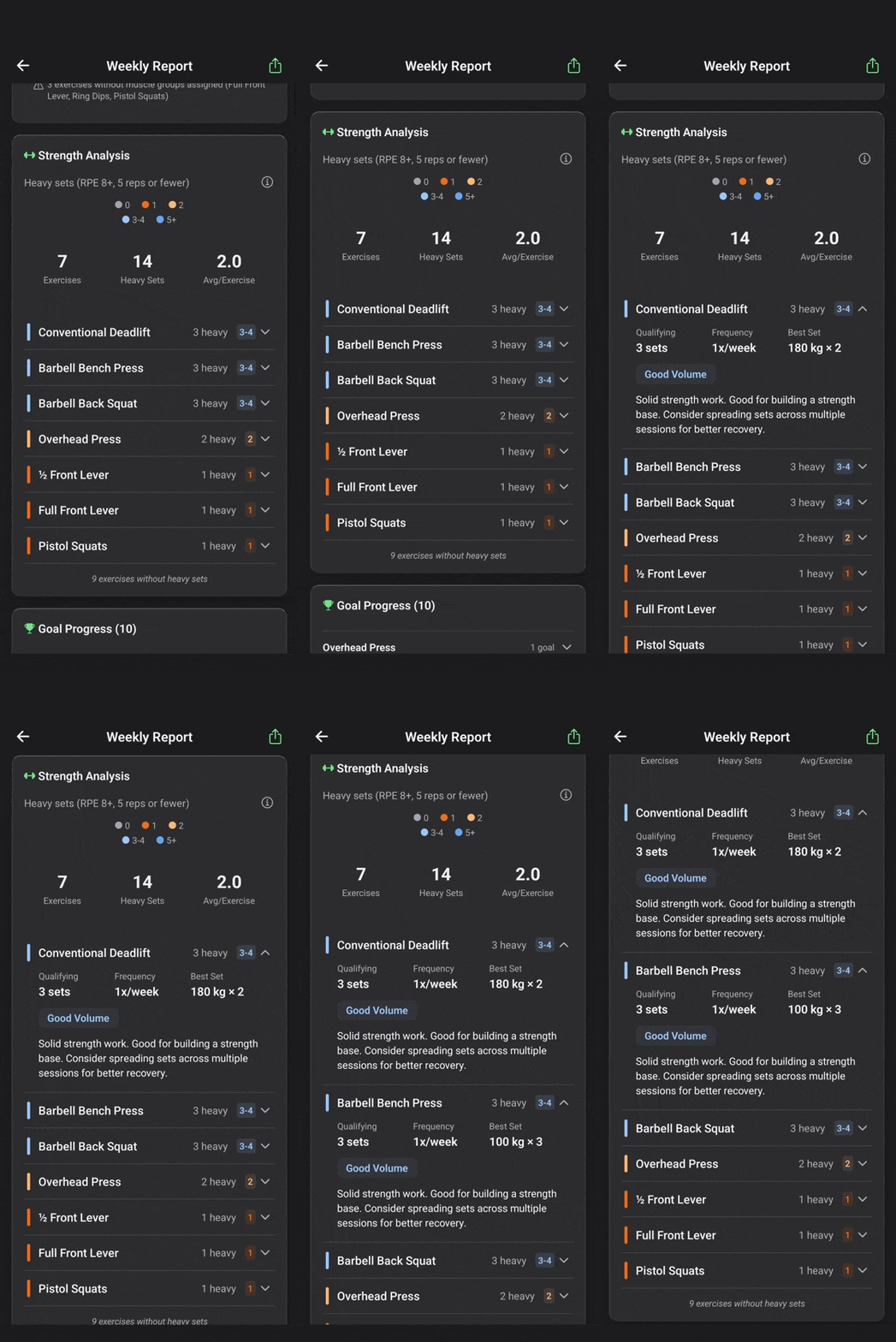
Also based on Pelland et al. (2024), this section analyzes your strength training stimulus.
-
Criteria: Counts sets with RPE ≥ 8 and Reps ≤ 5.
-
Frequency Focus: Research shows strength benefits significantly from increased frequency (100% probability in the meta-regression) rather than just volume.
-
Volume Tiers:
Weekly Volume Classification Notes 1-2 sets Optimal Maximum efficiency 3-4 sets Adequate Still effective 5+ sets Diminishing Additional volume doesn’t help -
Recommendations: The app may suggest spreading volume across more sessions (e.g., “Split 3 sets of Deadlifts across 2 sessions”) to optimize neural adaptations and recovery.
Learn more about the science behind this analysis →
Goal Progress
A summary of all goals progressed or completed during the week.
Export
You can export the Weekly Report as a PDF to share with a coach or keep for your records.